
I have a dear friend who lives in my neighborhood who lost her brother a few weeks ago. His death was a tragedy, both for those he left behind and the way he passed.
Death is a strange thing; it happens to everyone. And yet, it takes so long, for most of us, that it feels like it’s never coming. Granted, I am still in the middle of life, and I believe I may think otherwise as I age, and as my mom’s generation ages.
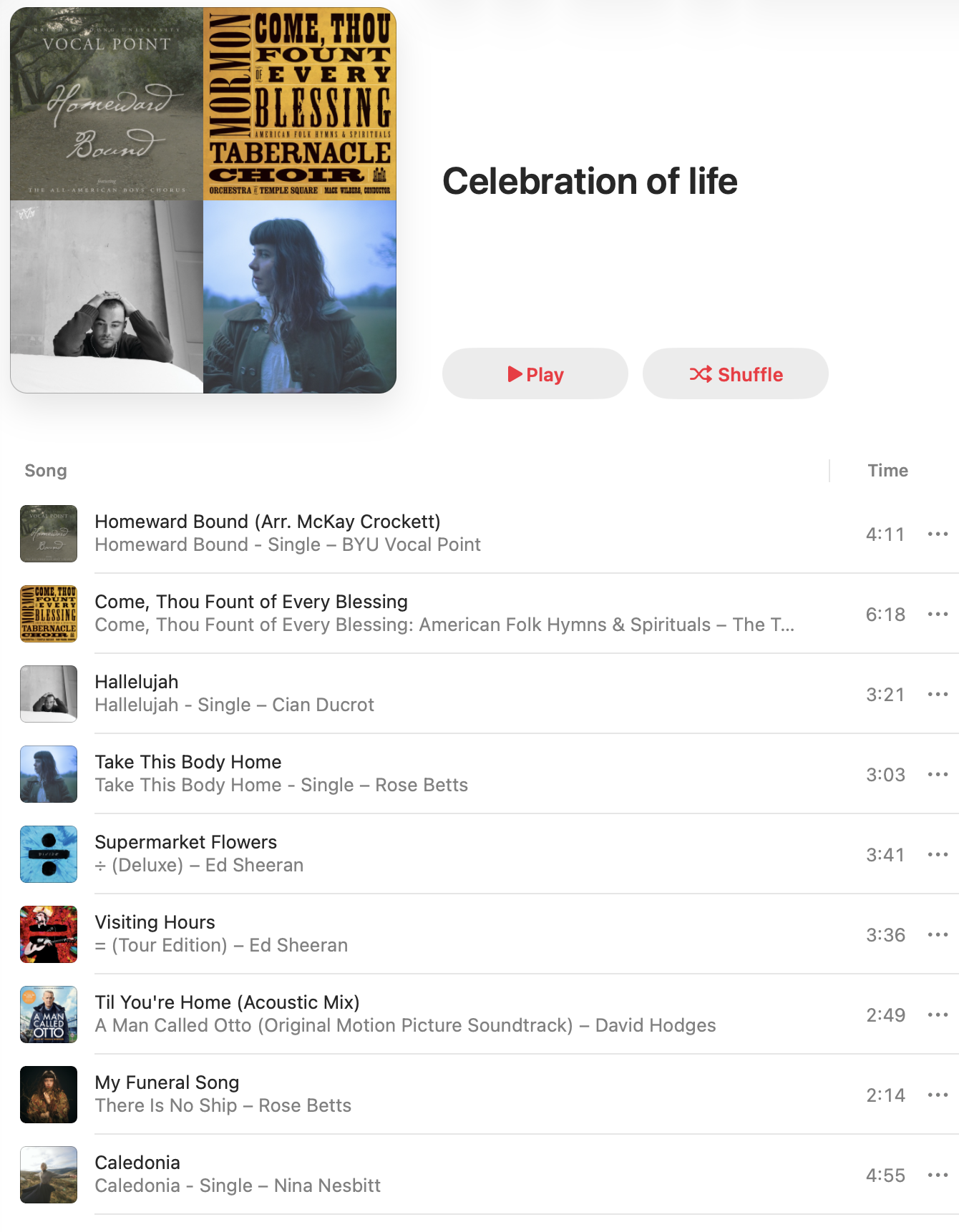
As I sat at a volleyball tournament for my daughter’s club this weekend, I thought about my friend while listening to my playlist on iTunes. Tears began falling as I heard some of my favorite songs in context to her experience of laying her brother to rest. Themes of home kept ebbing and flowing: home as a place of birth and a longing to belong, but also the echoes of our divine home, where we came from, clinging to the belief that we will someday return to our heavenly family. Other themes included the sting of loss, or deep pain for grieving a loved one, once in your arms and in your intimate circle, now beyond our reach, regardless of the aching to be held. Music offered poetry, which I shared with my friend, to speak a language of empathy and understanding.
I remember as a small child, one of my mom’s best friends died of cancer in her 30. It was so sad. She had a son my age. My mom played the piano for her funeral. As we went to the casket at the graveside, this deceased woman’s mother was inconsolably crying, weeping. She kissed the casket as tears streamed down her face. A soul-wrenching sob escaped from the belly of her being. I had never witnessed such tormented grief before, and didn’t understand why she was so devastated. I asked my mom about what I saw, “She doesn’t think she’s ever going to see her daughter again. She thinks this is the end.”
As a child raised in faith, I’d always been taught that death was just part of God’s larger plan to teach and tutor his children. Witnessing her grief became empathy inside of me, rather than judgment; if I believed I’d never see my loved one again, and this was the end, I may feel that way too.
The gift of death is a reminder that life is a treasure, that our time is finite, that what we do here in mortality matters, that we are loved beyond measure, and that each of us makes an unknowable, vast ripple in the lives of others. Maybe the biggest tragedy of losing someone unexpectedly is not telling them before they are gone, the impact they had on our lives.
I recently learned about “the River of Time,” an idea penned by the ancient Roman Emperor Marcus Aurelius, who wrote personal journals ruminating on the meaning of life. In his book Meditations, he acknowledges that each of us will be entirely forgotten in 2-3 generations. Like a “River of Time,” each of us, our memories and words, then echoed into the lives of those who knew us, will all eventually be swept away.
“The words which were once familiar are now antiquated: so also the names of those who were once much celebrated are now, as it were, in a manner antiquated… and in a short time they will be entirely forgotten, and no longer even heard of. And this I say of those who have shone in a wondrous way. For the rest of mankind, as soon as they have breathed out their breath, they are ‘unknown, unheard of.'”
If even the emperor of Rome becomes dust and a memory, all of us and our impact are washed away by time.
The only conclusion I can make, and that Aurelius came to, is that time is the gift. It is today that matters. It is now that is the prize. It is this rotation that means something.
To end, I am going to share my Grandpa’s favorite poem, which served as an inspiration for his day and today.
“I would rather be ashes than dust!
I would rather that my spark should burn out in a brilliant blaze than it should be stifled by dry-rot.
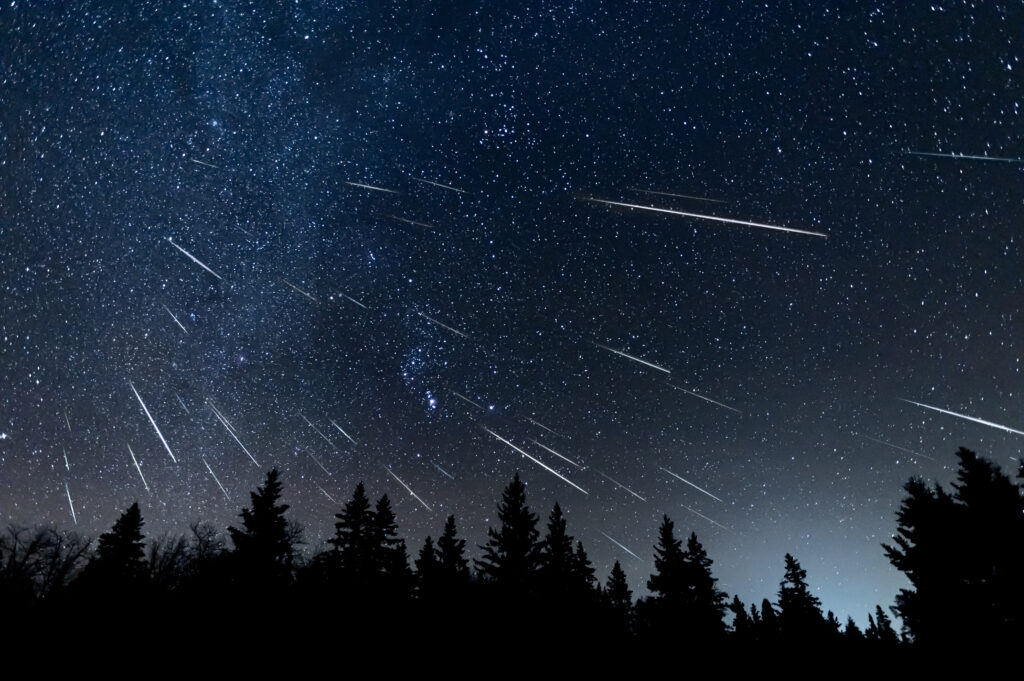
I would rather be a superb meteor, every atom of me in magnificent glow, than a sleepy and permanent planet.
The function of man is to live, not to exist.
I shall not waste my days trying to prolong them.
I shall use my time.”
― Jack London