
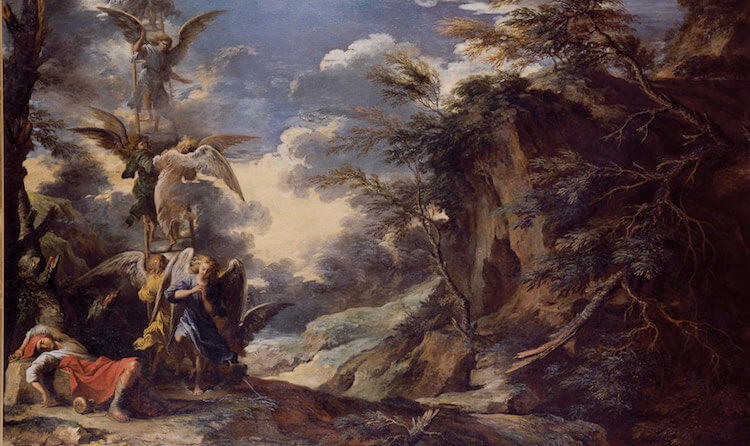
Bethel: The Pile of Rocks Where Heaven Opens
In 1998, I went to Israel to study abroad. My mom and my dad both lived in Israel when they were young adults, not together, but separately, before they married. From a very young age, we always had falafel and baklava, and I grew up knowing that I, too, would go to Israel.
At BYU Jerusalem, we had a class of 30 and a cohort of 90, and traveled all over Israel, Jordan, and Egypt. One day, we pulled up in our large tour bus to a pile of rocks in the middle of nowhere. There was no electricity, no running water, no buildings or houses, nothing. The landscape looks a lot like Northern Utah, with its sage-green hues and dusty landscape. The only major difference is that this landscape is scattered with boulders. As per usual, our teacher shared with us the scriptural story, followed by singing a hymn.
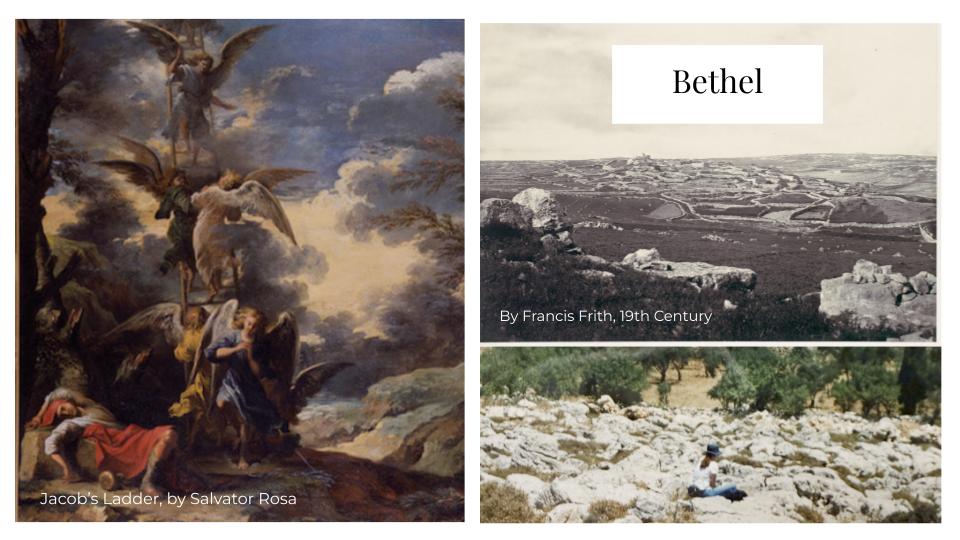
Bethel is the backdrop to several important stories, but the first I am going to share today comes from Jacob, who was Abraham’s grandson.
Jacob was a twin, one of the only two children Isaac and Rebekah had. The scriptures say his brother Esau was hairy, and Jacob was smooth. His mother received a revelation that the younger of the two brothers was to inherit the birthright and the blessings, despite tradition holding that the eldest son would rule the estate and the spiritual birthright. Esau was a hunter—an outdoorsman. Jacob liked to stay in the tent, I imagine, learning and writing.
Esau was hungry one day and sold his birthright to Jacob for a bowl of porridge. Then Jacob’s mother tricked Isaac into bestowing the last blessing on Jacob. Esau was furious. The scriptures say he was murderous, as Jacob ran away from the family home, escaping towards his uncle’s home for refuge.
Jacob ended up in Bethel on his way towards Haran, but needed to find a place to sleep before the sun set. With boulders surrounding him on every side, he picked a rock as a pillow. He had a dream: a ladder touched the earth and reached to heaven, angels ascended and descended, and on top of the ladder was Jehovah—the Lord Jesus Christ.
The Lord declared, “I am the Lord God of Abraham thy father, and the God of Isaac: the land whereon thou liest, to thee will I give it, and to thy seed; And thy seed shall be as the dust of the earth, and thou shalt spread abroad to the west, and to the east, and to the north, and to the south: and in thee and in thy seed shall all the families of the earth be blessed. And, behold, I am with thee, and will keep thee in all places whither thou goest, and will bring thee again into this land; for I will not leave thee, until I have done that which I have spoken to thee of.” – Genesis 28:13-15
This covenant is the same promise that his grandfather Abraham received; while we know it as the Abrahamic Covenant, it didn’t start with Abraham, and it didn’t belong to Abraham. This is the same promise that began on earth with Adam’s promised blessing, running through Enoch and even Noah.
In this moment, three things are promised:
- Number one, his children would inherit the land.
- Number two, he would have an infinite number of children.
- Number three, all nations of the earth would be blessed because of this promise.
Then Jacob woke up and said, “Surely the Lord is in this place; and I knew it not.”
That’s the first thing I hope you take away. There are moments when life feels like a pile of rocks, and later you realize: “Surely the Lord was in that place, and I knew it not.”
Then Jacob says, “How dreadful is this place.” Nothing around him looks impressive, but spiritually, he says, “This is none other than the house of God, and this is the gate of heaven.”
Bethel literally means “house of God.”
Jacob took the stones, stacked them, and consecrated them with oil. In the scriptures, this is called an ebenezer. Anciently, when something spiritually significant would happen, believers would stack rocks on top of each other as a marker—an Ebenezer. We hear this word in the song, “Come Thou Font,” in the line, “Here I raise my Ebenezer; hither by thy help I’m come; and I hope, by thy good pleasure, safely to arrive at home.”
“Nearer, My God, to Thee” – A tribute to Bethel
After learning about Jacob’s ladder, as BYI student, we sang “verses”Nearer My God to Thee,” that is a tribute to this significant and beautiful story.
Nearer
My God to Thee
“Though like the wanderer, the sun gone down, darkness be over me, my rest a stone—yet in my dreams I’d be nearer, my God, to thee.”
“There let the way appear, steps unto heaven… angels to beckon me, nearer, my God, to thee.”
“Then with my waking thoughts bright with thy praise, out of my stony griefs Bethel I’ll raise… so by my woes to be nearer, my God, to thee.”
During my college studies, we went to Jerusalem, Bethany, Bethlehem, Nazareth, Golgotha, and Gethsemane. But I felt the Spirit the strongest in Bethel. The Spirit burned in my chest. To me, it was a witness that this truly is the house of God.
What It Means to Be a Child of the Covenant
I love the scripture in Malachi about “the hearts of the children turning to their fathers.” Joseph Smith—History expands our understanding of what this means. We learn, “He shall plant in the hearts of the children the promises made to the fathers…”
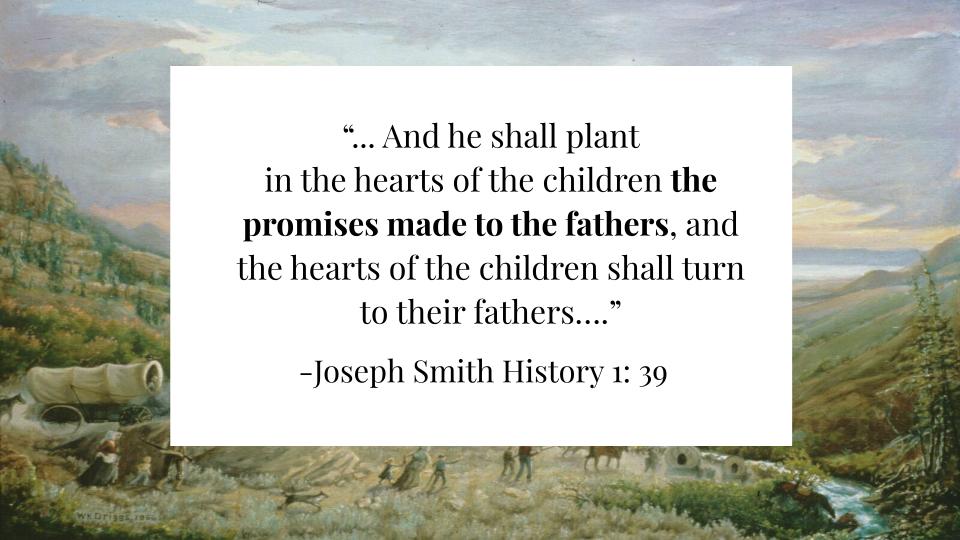
Being a child of the covenant means the seed of faith is planted in our hearts. In the scriptures, “heart” is often about our desires—what we’re willing to do because we love something. The promises made to the fathers are planted in our hearts, and then our hearts turn.
In the Book of Abraham, “father” can mean a biological father, our ancestors, and the covenant fathers—Abraham, Isaac, and Jacob.
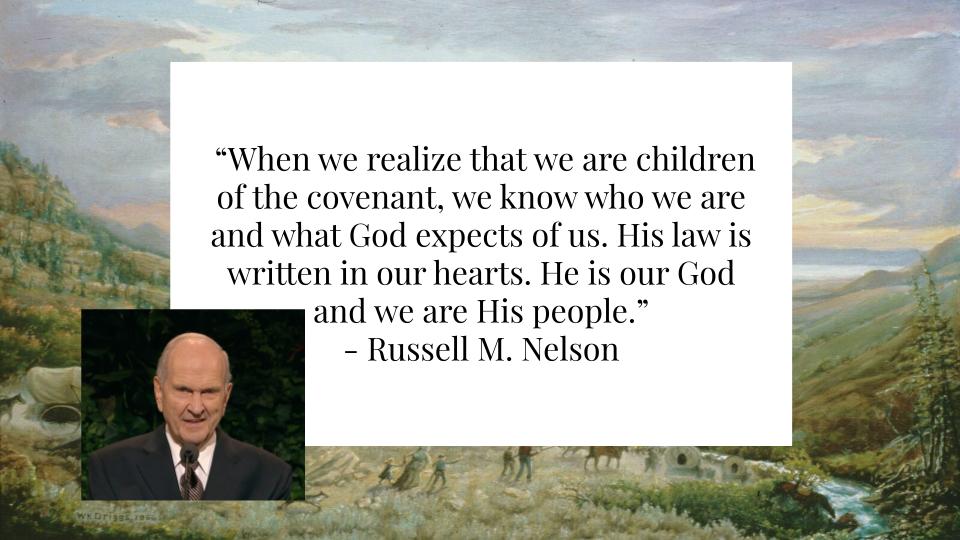
When we realize we are children of the covenant, we know who we are and what God expects of us. His law is written in our hearts. He is our God, and we are His people. That’s what it means to be a child of the covenant: that we know that He is our God, and we are His people.
Inheritance: “All That the Father Hath”
One way to think about this is through inheritance.
We can inherit an estate. We can inherit physical traits. We can inherit spiritual characteristics. We can inherit trauma. We can inherit legacy.
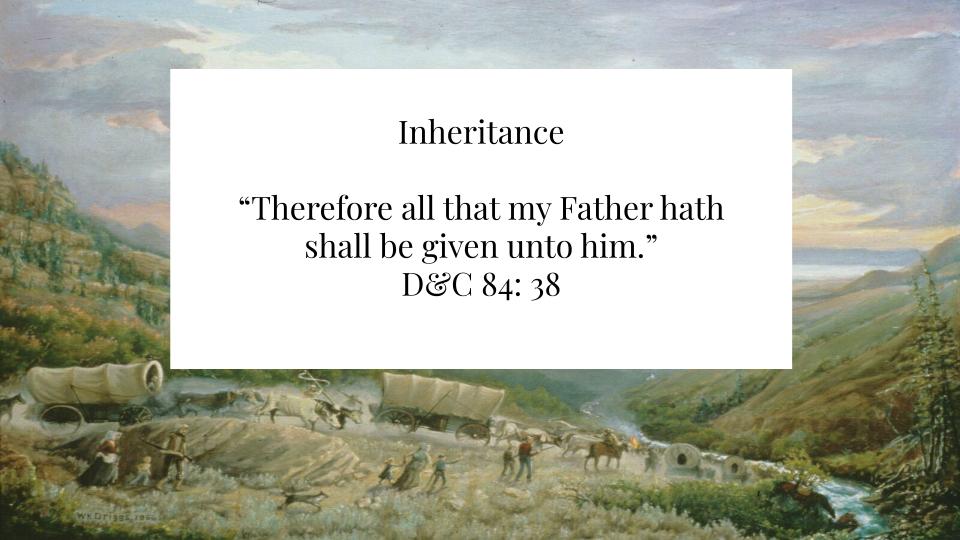
Recently, my mom’s husband moved to assisted living, it takes a lot of time and energy to prepare end of life care. I was at my mom’s home helping her organize paperwork. She was in the kitchen, and I was in the living room. As I was working, I was overcome with a feeling of the spirit burning in my chest.
As I pondered the meaning of this sensation, the spirit came to my mind, “All that the Father hath…” I went home and found the scripture: “Therefore, all that my Father hath shall be given unto him.” – D&C 84:38
What does it mean to be a child of the Abrahamic covenant? It means that as his inheritors, we can receive all that the Father has. He wants to give to us. That’s the inheritance.
Abraham and Sarah’s Journey
To understand the covenant, I’d love to invite you on a journey across the Middle East as we follow Abraham through the deserts, into ancient cities, bumping against ancient powerhouses, and finally landing at the foundation of what we now know as Israel.
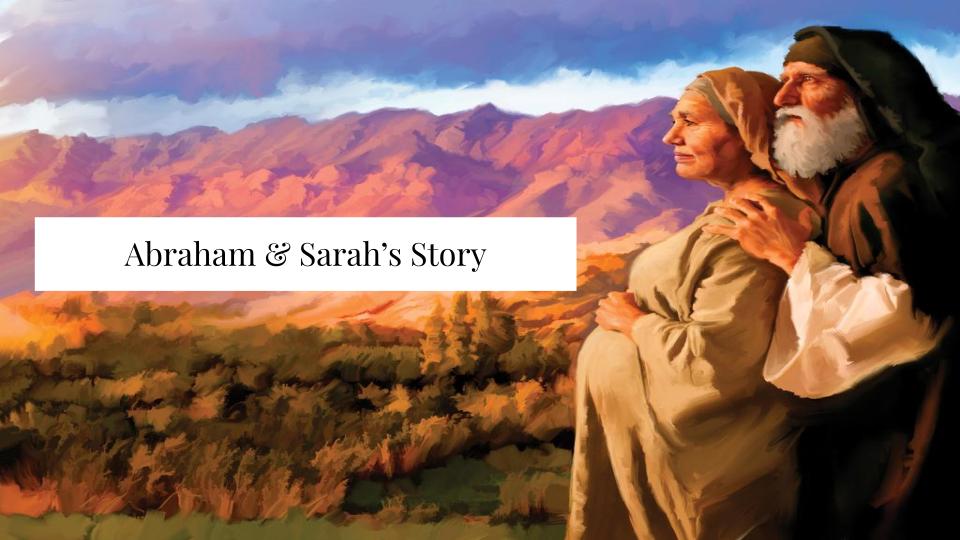
Ur — Law of Obedience
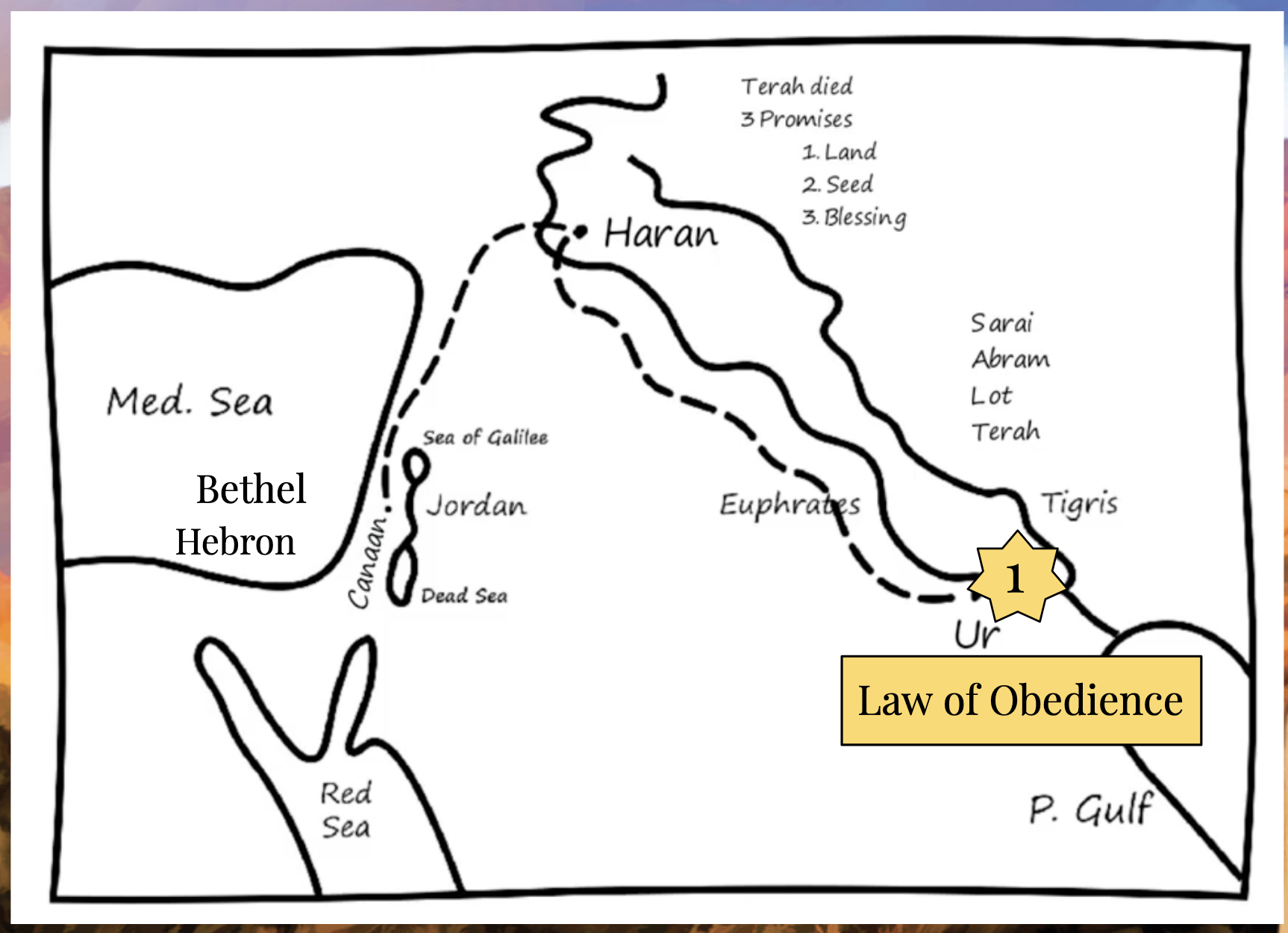
We’re going to start in the city of Ur, southern Iraq, today. The Book of Abraham starts with Abraham saying, “I found it needful for me to obtain another place of residence.”
A mild understatement, introducing his brush with death on the table of murderous idol worshipers, led by his father Terah’s wishes.
He called out his father’s idol worship, angering the powerful Priests of Pharaoh. His condemnation of their practice inspired a first-in-line ticket to sacrifice.
We learn that he called out to God for deliverance, and Jehovah loosened his bands and spared his life.
If your life has ever started in a place where you were trying to do the right thing and it made things harder, you’re not alone. Sometimes obedience is the first step into conflict. Sometimes it’s the first step into rescue.
Early on, Abraham loved God and the fathers. He is a record keeper, and he finds the scriptures of his prophets. He wants the priesthood of God, not the priestcraft of Pharaoh. He wants to learn the gospel, and he is obedient.
The first law in the temple endowment is the law of obedience. God wants us to obey him and to know the law. I believe that obedience to the law is one step higher than merely keeping the commandments, that we covenant to keep when we are baptized members of the Church of Jesus Christ of Latter-day Saints. The commandments are a set of rules that are standards, the same across generations, time, and locations. Obedience is the capacity to hear God directly speaking to you, guiding specific circumstances and choices. Not only is it a gift to know a loving Father has the capacity and desire to support and direct our lives in such specific and personal ways. This gift requires the ability to hear and a willingness to obey.
Haran — Law of the Gospel
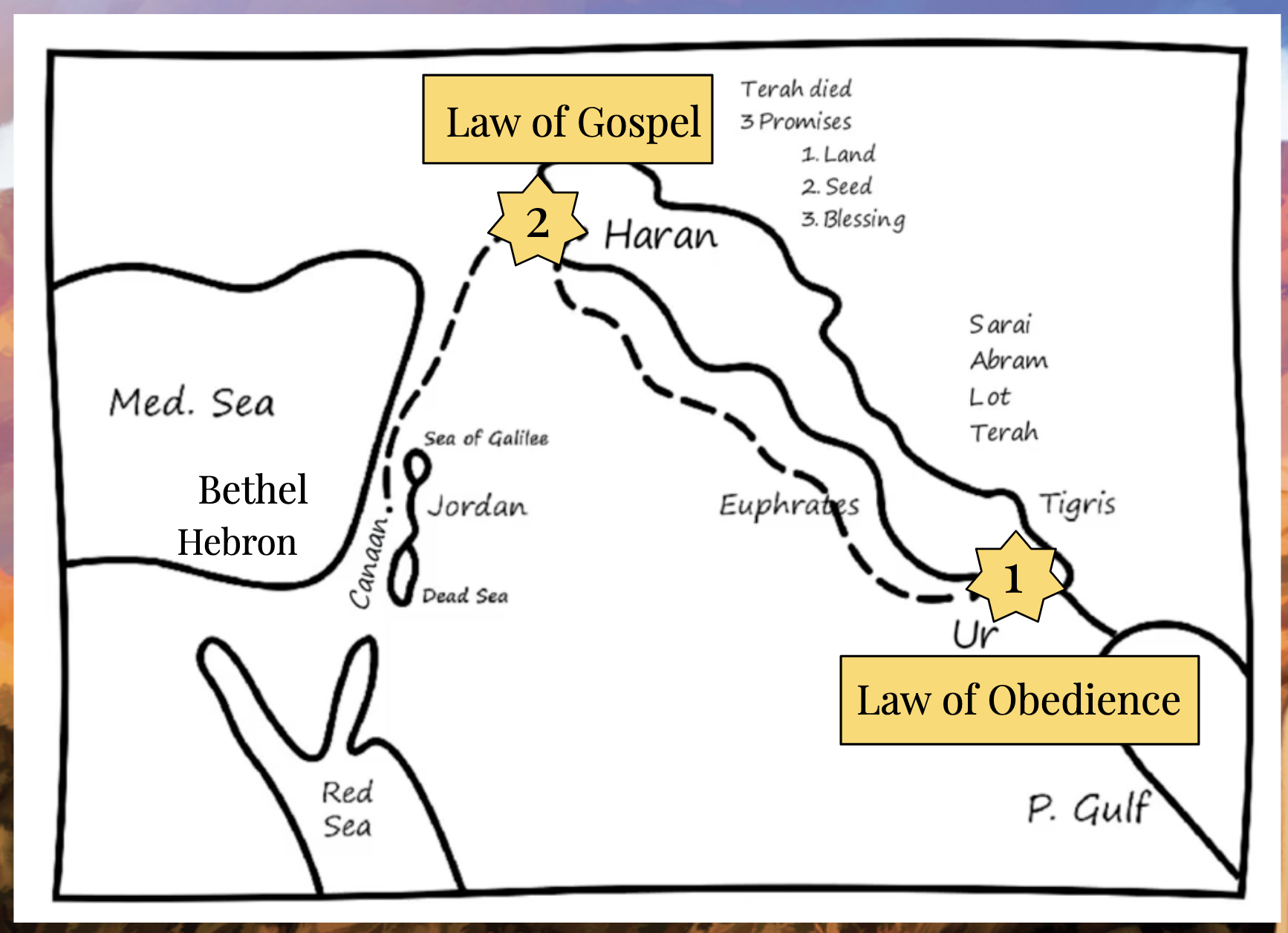
Abram intends to go to Canaan, and they follow the Euphrates River up to the city of Haran. It’s easy to remember who goes; think of the acronym SALT: Sarai, Abram, Lot, and Terah. Abraham takes his nephew Lot, whose father had died during the famine in UR, and his wife, Sarai (later renamed Sarah). We learn that his father, Terah, follows him. His heart is softened, and he repents of his idol worship.
Jesus Christ appears to Abraham here, and he repeats the same promises we later see given to Jacob at Bethel. He promises land, promises of a great posterity, and he promises that all the nations of the earth will be blessed.
Looking at this correlation between living the Law of the Gospel, the third promise we make in Latter-day temples, why is the promise of land associated with the law of the gospel? I believe that its because, when we are baptized into the Church of Jesus Christ of Latter-day Saints, we have a home. When we make covenants through Jesus Christ, we are eternally bound to God, which ensures we have a place to call home. I know that home can be complicated, and for some of the readers, that’s not a comfort because of your own earthly experiences. But I want you to consider for a moment, our Heavenly Father and Mother’s desire to provide a place for you to belong, to commune, to serve and to grow. This association with a land blessing directly correlates with God’s desire for us to come home to him.
Unfortunately, Terah returns to idol worship. Abraham is called to move to Canaan. We don’t know if Terah passes before he leaves, or after, but we do know that Abraham again exhibits obedience to God’s direction, and takes Lot, and his wife Sarai, and travels into Canaan.
An interesting side note, according to the Book of Genesis, they didn’t leave Haran until Abraham was 75. So if your life is not quite where you want it to be yet, even if you’re at the end of your life, it’s okay.
Bethel — Law of Sacrifice
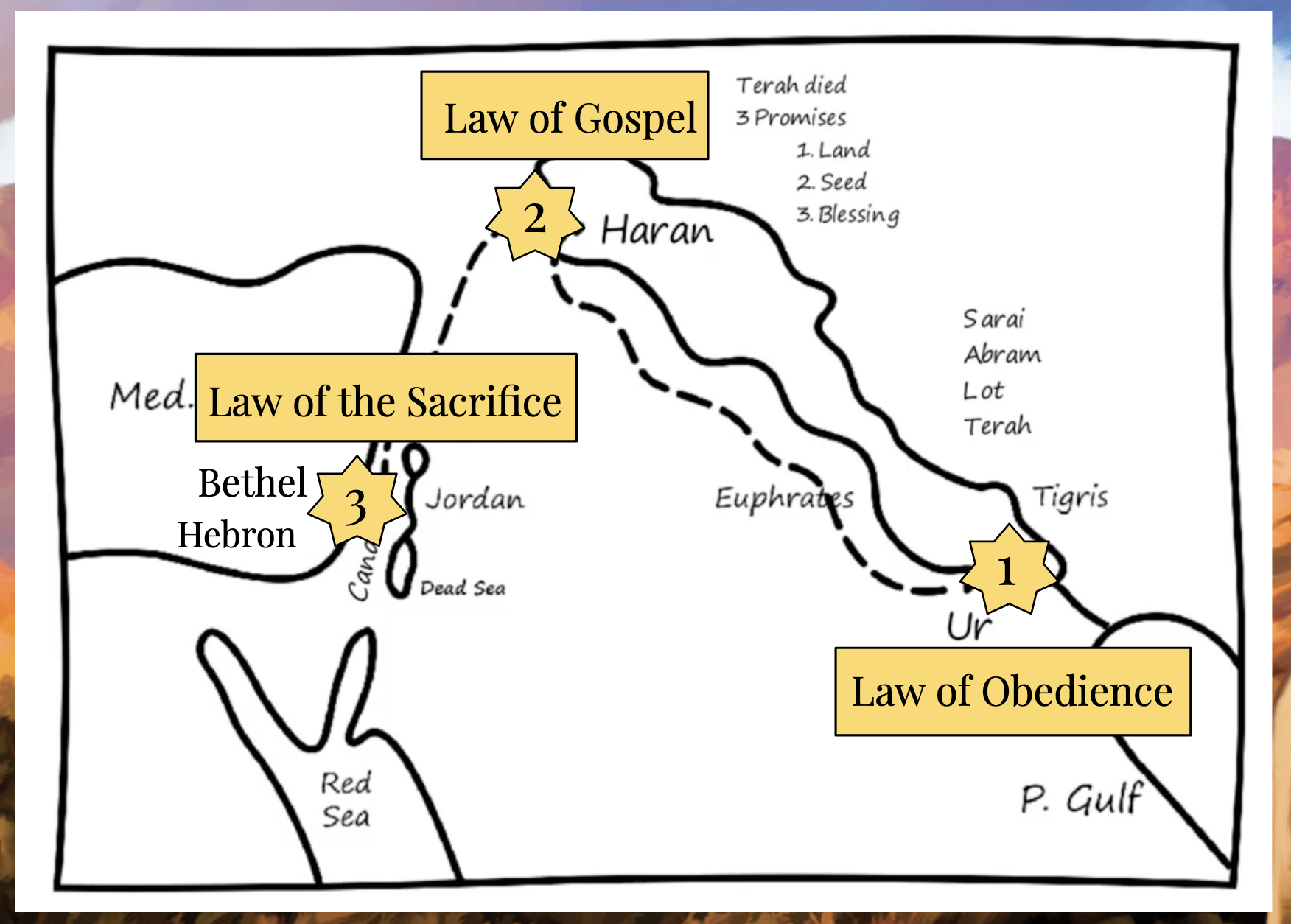
Bethel is basically a pile of rocks in the middle of nowhere. In our modern day, there’s no electricity, there’s no running water, there’s no buildings, there’s no village, there’s no rivers. It literally is a pile of rocks.
But Bethel is holy.
Abraham travels to Bethel and builds an altar to offer a sacrifice. So this is where he enters and begins practicing living the gospel.
In Bethel, is there any wonder why, when Jacob comes across this place, that it feels holy? He might have slept by his grandpa’s altar. A stone next to his pillow of stone. Jacob wakes up and says, “Surely the Lord is in this place, and I knew it not.
If you’ve ever been in your own “pile of rocks,” this is the message: the Lord can be in that place too.
And Jacob calls it the house of God, and the gate of heaven.
Bethel teaches sacrifice in a way that isn’t theoretical. Sacrifice is not just what we give up. Sacrifice is what we bring. It’s what we lay down. It’s what becomes holy because we offered it.
Egypt — Law of Chastity
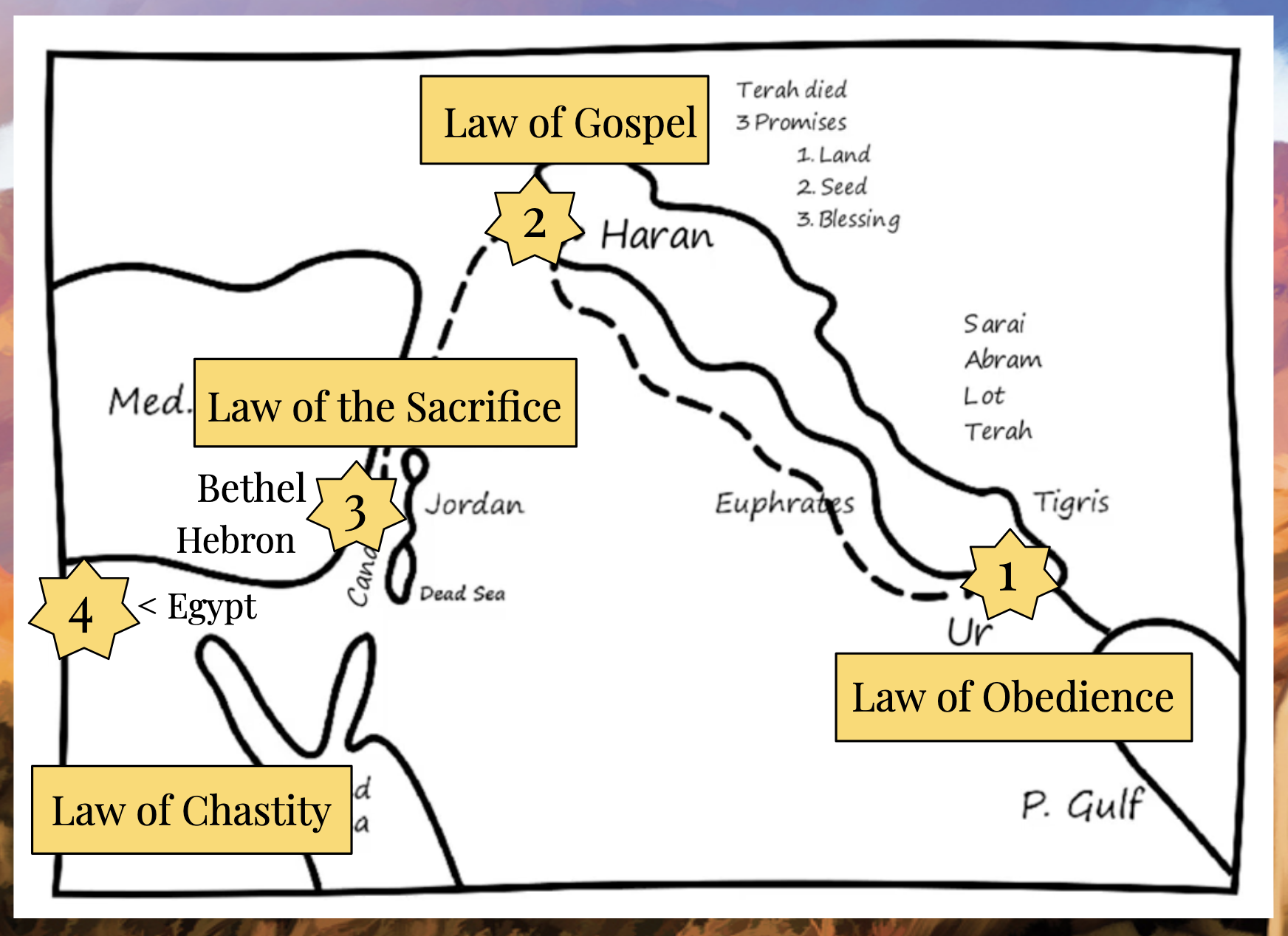
Canaan is dry. There’s a drought. They have to leave for Egypt. In the scriptures, Egypt typically represents two things: relief and temptation. Abraham is instructed to tell the Egyptians that Sarah is his sister, which is true. Weird, but true.
He is warned in a dream to say that she is his sister. Sarah is taken by Pharaoh with the intention of making her a concubine. Instead of that happening the way Pharaoh wanted to, the whole household was plagued with a sickness.
I want to be really careful here, because being sexually abused is not a violation of the law of chastity. I just want to acknowledge that.
Egypt is a place where the covenant is tested in real ways, and it’s also a place where God protects and rescues. Abraham blesses Pharaoh to be healed through the power of the priesthood. Then Pharaoh sends them away with gold and servants, and that’s where we see Hagar enter the picture. We learn in the Doctrine and Covenants that God commanded Sarah to give Hagar to Abraham as his wife. The law of chastity according to our temple worship means that we don’t have sexual relationships unless it is with our husband or wife, according to God’s law. While this is a complicated subject, I want to honor God’s path. In obeying this law, the direct blessing of posterity, has come into fruition. Both through Sarah and through Hagar.
If you’ve ever had a season when you were both relieved and tested at the same time, when you needed help but also discernment, you understand Egypt.
Hebron — Law of Consecration
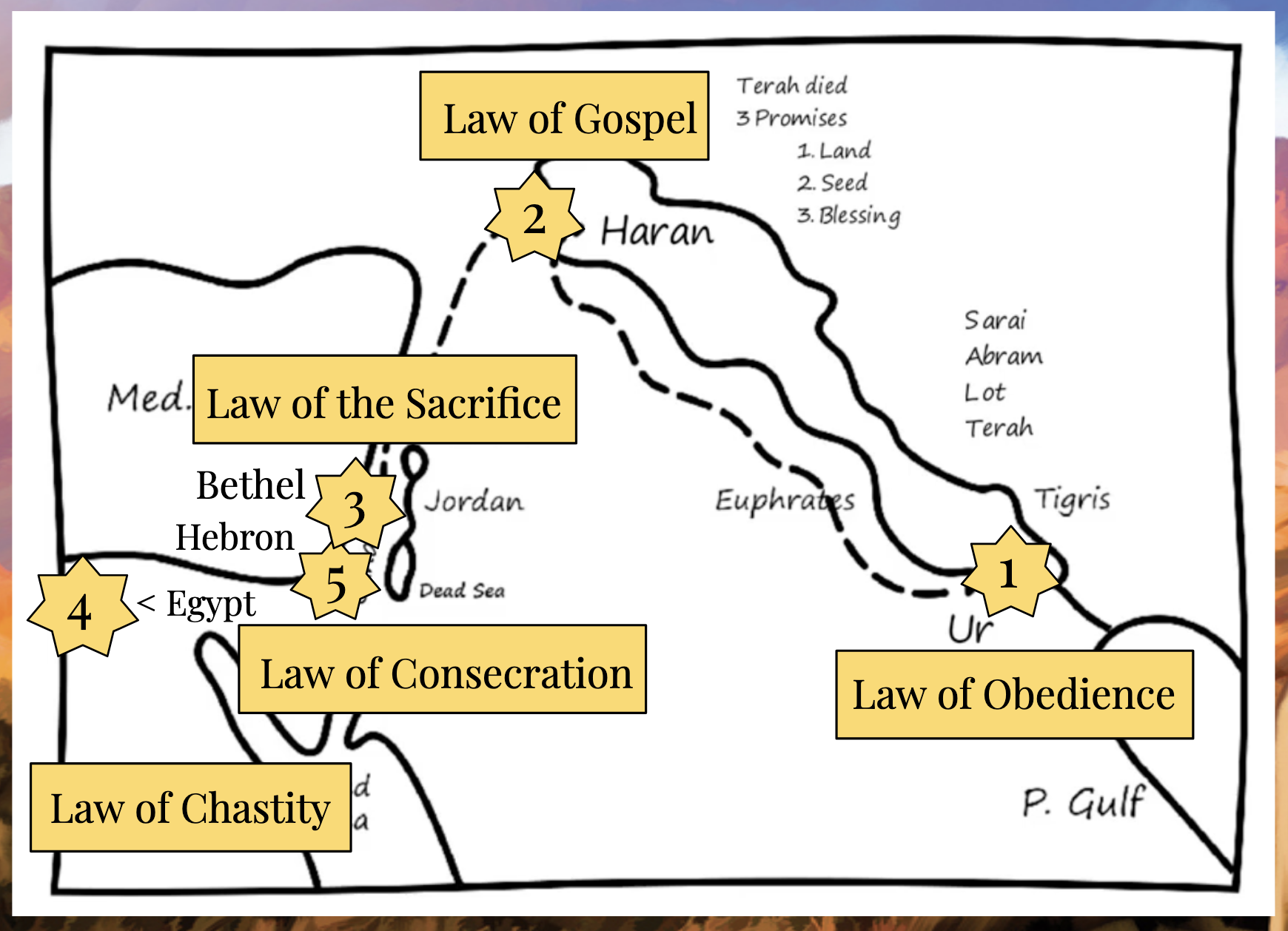
Abraham and Sarah end up back in Hebron, where they are ultimately buried. Sarah ends up having Isaac when she’s 90 years old, and Abraham is 100. The last thing God asks of Abraham is Isaac’s life.
I want you to think about consecration: it’s the thing you’ve waited your entire life for, the thing you love most. If sacrifice is a broken heart. What is consecration? It is your whole heart. The word consecration means to make holy. By willingly giving, we are transformed into holiness.
In the story of Abraham, the command to sacrifice Isaac is ultimately met with relief. God spares the ultimate cost of obedience and tells Abraham that he can sacrifice an animal instead of his son. As we know, this experience was made in similitude of the sacrifice Jesus Christ would ultimately make. Elohim was not spared the pain of paying the price with his son’s blood. Most of the time we are asked to consecrate all, it is not at such a high price. It’s also my belief that God doesn’t always prevent the blade from falling on the thing we love most. The only sense I can make of these hardships is a heartfelt desire to trust a loving God who knows the ultimate path to our return.
Consecration Today
As I mentioned, I was called to be the Relief Society president in March, and it was overwhelming. I run a business. I have four kids. I have a husband. I was dealing with difficult health challenges. I was overwhelmed.
I had a conversation about consecration with Julie Pulsifer, who had been called, along with her husband, to serve as mission presidents. She told me something Elder Becerra said to her: “Julie, you’ve already promised to obey the law of consecration in the temple, and now you get to actually live it.”
She then looked at me directly and said, “Sarah, I want you to remember that word, ‘consecration’ as you begin your service.”
A Personal Covenant Story
My parents divorced when I was a baby. My dad was emotionally abusive, and he was unfaithful to his covenants in private and public ways. She often reminded me, “You were born under the covenant. Regardless of what happened with your dad and me, you were born under the covenant.” As a kid, I didn’t fully understand what that meant, but it felt good.
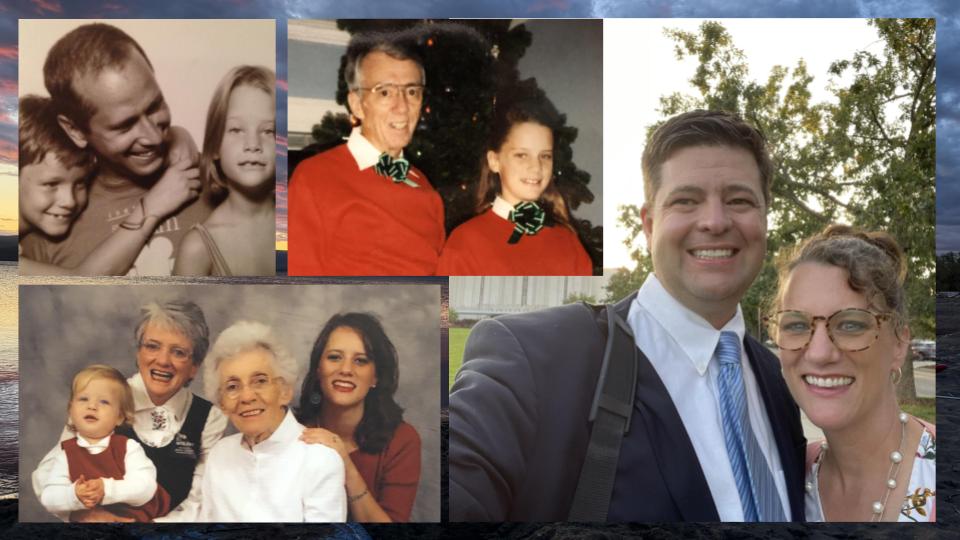
The montage of photos includes an image of my dad and brother in the top left, and me and my grandpa in the upper center. Throughout my life, he played the role of my father. He was diagnosed with Alzheimer’s the same day that my dad was diagnosed with AIDS. My mom offered a sincere and heartbroken prayer, “Please let John go quickly, and let Grandpa live as long as life is sweet.” My dad died in eight months, and my grandpa lived nine more years.
When my grandpa passed away, we were surrounded by family. He lived an incredible life, reaching the heights of an academic career and an entrepreneurial endeavor. His work created a global impact. He had the respect of leaders around the world, but what mattered most to me was that he was my grandpa and my safe place. He gave me a name and a blessing; he baptized me; he took me on a 12-mile hike when I was just 7 years old; and he taught me to ski. After he died, grief hit me in a way I didn’t expect. I left our family vigil of about 20 people, including my grandma, mom, brother, aunts and uncles, and cousins; found a secluded alcove in the hallway, and sobbed. I wasn’t just grieving my grandpa—I was grieving the contrast with my dad. My dad died all alone in a hospital room in New York City. He was penniless, he betrayed his wife, broke his covenants, and abandoned his kids. He had nothing. I wasn’t just sad about him; I was devastated for him. My grandma Joy came and found me. Ten minutes after her husband died, she noticed I was gone and came looking for me.
I said, “Grandma, I’m sad that Grandpa is gone, but what about my dad?” What’s going to happen to him?” She taught me the gospel in two sentences. She taught me exaltation. She taught me forgiveness.
She said, “Sarah, while it is true we all only get one chance to accept or reject the gospel, we don’t know when someone has the capacity to hear it. Now your dad is with the only person who can teach him, and that is the Savior.” She helped me understand that the Atonement is big enough for my dad, and that he wasn’t the only one who needed to be rescued.
Jesus Christ Is the Ladder
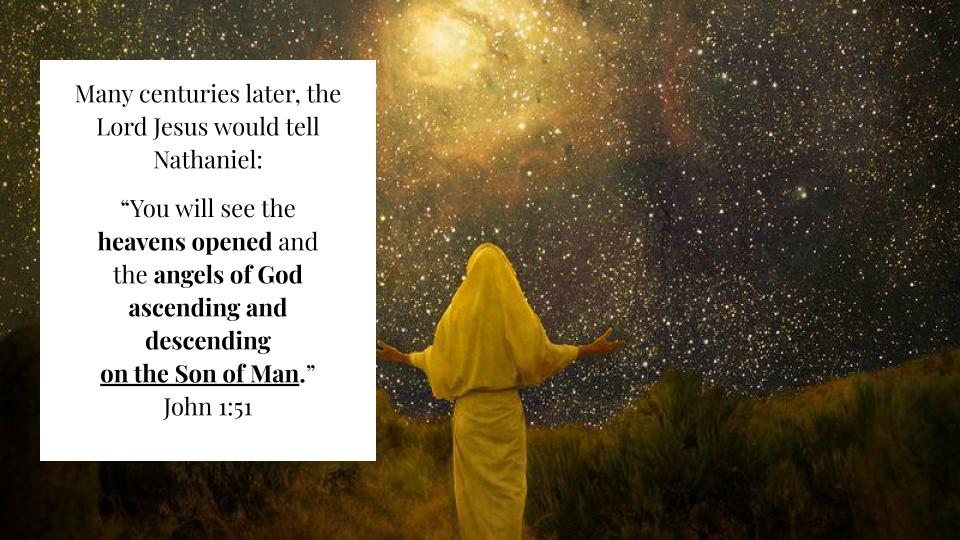
At the end of Jesus Christ’s life, He speaks to Nathanel, an apostle also called Bartholomew, and says: “You will see the heavens opened and the angels of God ascending and descending on the Son of Man.” It’s Jacob’s ladder—but Jesus Christ is the ladder. He is the way.
Because I Am a Child of the Abrahamic Covenant
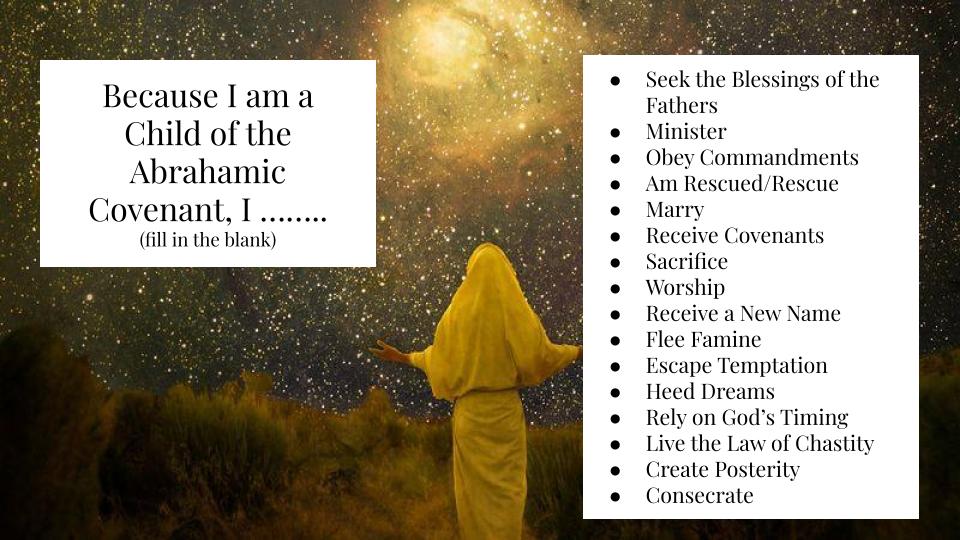
As we wrap up this topic, I want you to see yourself in Abraham’s story. I can look at where Abraham and Sarah traveled, the pain and joys they endured, and see myself in those moments. It may not be in the dusty plains of the Middle East, but the moments are our shared humanity. Being rescued, desiring obedience, sacrificing, seeking refuge, and avoiding temptation. I invite you to look at the list; it’s not just the covenantal blessing, the things we promise, but it’s also a path towards a consecrated life.
Because I am a child of the Abrahamic covenant:
- I seek the blessings of the fathers.
- I minister.
- I obey the commandments.
- I am rescued, and I rescue.
- I flee famine.
- I escape temptation.
- I heed dreams.
- I rely on God’s timing.
- I live the law of chastity.
- I create posterity.
- I marry.
- I receive covenants.
- I sacrifice.
- I worship.
- I receive a new name.
- I consecrate my life.
NOTES:
| Timeline Event | References | Pillar |
| Abram desires righteousness / seeks priesthood | Abraham 1:2–4 | Abram Seeks Abram Obeys– Law of Obedience |
| Abram lives in Ur among idolatry; father/fathers connected to idolatry | Abraham 1 | |
| Attempted sacrifice of Abram (rescued; Book of Abraham / Facsimile 1) | Abraham 1 Facsimile 1 | Abram In-Danger Abram Rescued |
| Abram married to Sarai | Genesis 11:29–31 | Sarai and Abram Marry -Sealing |
| Terah takes Abram, Sarai, and Lot, and they leave Ur, headed toward Canaan, but settle in Haran. ** Initial covenant call/promise: land + seed + blessings | Genesis 11:31 | Terah returns to idol worship & Dies. Covenants Received |
| After Haran, Abram leaves for Canaan (Bethel) with Sarai and Lot – 75 | Genesis 12:1–4; Abraham 2:6–11 | Altar/Sacrifice – Law of Sacrifice |
| In Canaan: famine → Abram goes down to Egypt – 75 | Genesis 12:10 | Abram and Sarai Flee Relief/ Temptation |
| Pharaoh takes Sarai into his house; God intervenes; Sarai is returned – 75 | Genesis 12:14–20 | Sarai Spared Law of Chastity |
| Return to Canaan – BETHEL – | Genesis 13:1 | Abram Offers *Sacrifice/Altar |
| Abram and Lot separate: Lot chooses the Jordan plain near Sodom; Abram dwells near Mamre/Hebron ** Covenant reaffirmed/expanded after separation: land + posterity** | Genesis 13:5–18 | Abram and Sarai Receive Covenants |
| Abraham saves Lot after he is kidnapped | Lot Rescued | |
| Covenant promises reaffirmed (posterity/land) Reaffirmations: stars promise & covenant made; later confirmations (including oath) | Gen 15; Gen 17; Gen 22; Abr 2:9–11; D&C 84:34; 3 N 20:25–27 | Covenant Reaffirmed |
| Sarai gives Hagar to Abram → Ishmael – 85 | Gen 16:3; Gen 12:4; D&C 132:34–35 | Chastity Sarai Doubts God, Belief in God’s Promise – Doubt the timing or the way. My way. |
| Isaac is promised; covenant sign / name changes (Abram → Abraham; Sarai → Sarah) – 99 **Major covenant milestone: covenant sign + name changes; Isaac identified as covenant heir** | Genesis 17:1–8; Abraham 2:9–11 | New Name -Initiatory |
| Isaac is born – 100 ** Promise fulfillment marker** | Genesis 21:5 | Posterity |
| Abraham is commanded to offer Isaac – after 100 ** Covenant reconfirmed by oath after obedience** | Genesis 22 | Consecration |
| The sacrifice of Isaac seals the covenant | -Law of Consecration | |
The Abrahamic Covenant and what it means today in the Church of Jesus Christ of Latter-day Saints
| Abrahamic Covenant | What God Promised | What it means today |
| Promised Land Genesis 12:1-7, 13:14-17; 15:18; 17:8 Abraham 2:6; 1 Nephi 17:38; Ether 2:8-12; D&C 38:18-20 | Inheritance | Celestial KingdomBaptismTemple Endowment |
| Priesthood Gen 14:18-20; 17:7; Psalm 105:8-11; Abraham 2:9; D&C 84:14-17; ED&C 107:40-42 | Authority and Ordinances | Sealing/Marriage, Family history and proxy work |
| Posterity Genesis 12:2; 15:5; 17:4-6; 22:17; Abraham 2:9-11; D&C 132:30-31; Mosiah 15:10-12 | Eternal Increase | Sealing/Marriage, Family history, and proxy work |
| All Nations would be blessed Gen 12:3; Galatians 3:8; Romans 9:6-8; Abraham 2:10-11; 1 Nephi 22:9; 3 Nephi 20:25-27; D&C 110:12 | Gathering Israel | Missionary WorkTemple Proxy Work: Endowment and sealing for the dead |
| Gospel | Salvation through Christ | Sealing/Marriage, Family history, and proxy work |
| Salvation & Exaltation Genesis 17:7; Hebrews 11:9-16; Revelation 21:7 | Eternal Life | Temple endowmentSealing Covenant Faithfully endure |